HOFame: History, Mystery, Future, Part II
Part II: Evolution, adjustments and changing results
🏈🏈🏈🏈🏈🏈🏈🏈🏈🏈🏈🏈🏈🏈
Editor’s note: This is Part 2 of a five-part series on the evolution of the Pro Football Hall of Fame, from concept to completion and through the years to the current status. Written by Frank Cooney, in his 33rd year on the Hall of Fame selection committee. We also provide unique research, analysis and data to complement this series
*Access the full HOFame Reference post here.
Hall of Football is not affiliated with the Pro Football Hall of Fame. All analysis and opinions expressed are solely those of Hall of Football (HallofFootball.substack.com).
🏈🏈🏈🏈🏈🏈🏈🏈🏈🏈🏈🏈🏈🏈
After launching in 1963, the Pro Football Hall of Fame did not evolve in a straight line. It moved in phases — sometimes by design, sometimes by necessity, and occasionally by correction.
The first phase was simple.
It looked backward.
From 1963 through 1966, selectors were not debating contemporaries. They were establishing a foundation. The first class began with the great Jim Thorpe and worked forward from there, filling in four decades of professional football history.
By the early 1970s, that process began to take on structure. Limits were put in place — a maximum of six inductees in a class, with three generally viewed as a practical minimum. Those guardrails were not theoretical. They shaped outcomes — who advanced, who waited and how the room made its decisions.
Our complete chart (1963–2026, analysis of all inductees) and other unique analysis for this series is available in our Research Guide.
The inaugural class deserves to be seen in full.
1963-1966
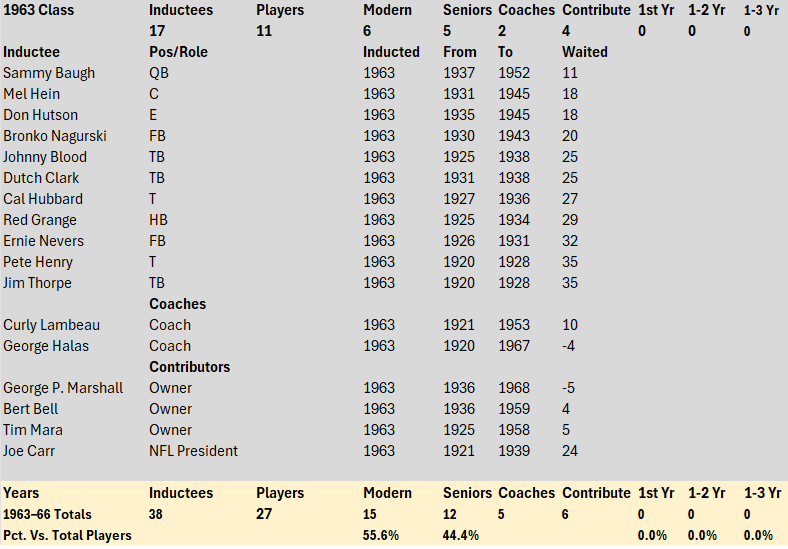
The Hall began by honoring the past, not judging the present.
That changed quickly.
By the end of the 1960s, structure began to take hold. Class sizes were defined. Categories emerged. And something new appeared — early induction.
Players no longer waited. They moved. Again, although category rules were unsettled in early years, we created an overriding rule that players waiting more than 25 years are seniors, which equates to current designations.
1967–69 Snapshot

- Players: 16
- First-year: 18.8%
- Within 3 years: 43.8%
- Seniors: 12.5%
- The modern pattern begins.
It was never written as a rule. But it became one.
Through the 1970s, 1980s and into the 1990s, the process settled into a rhythm. Most classes were built around modern-era players. Seniors were included, but sparingly. And the timeline for induction became more predictable.
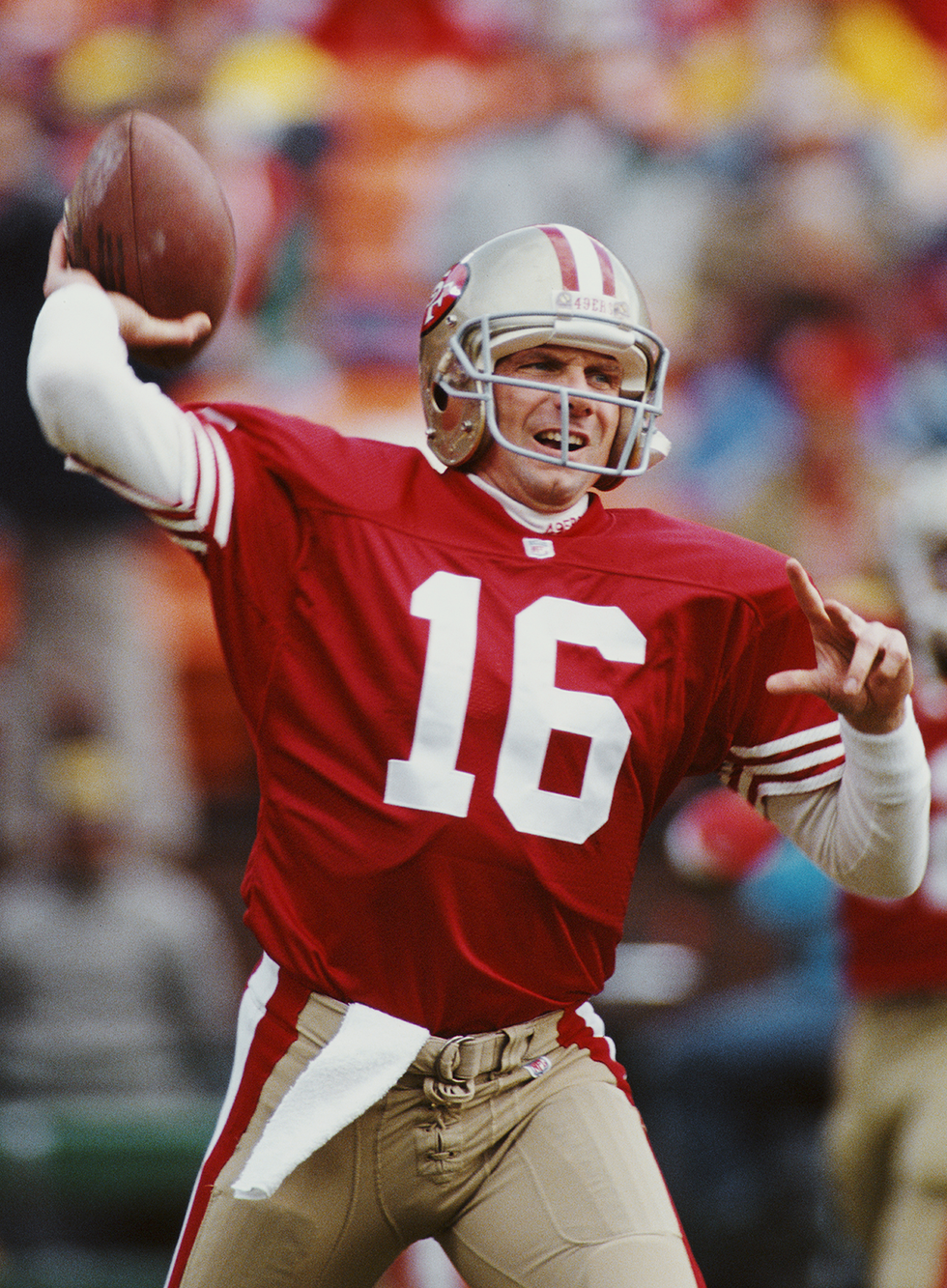
Players like Walter Payton and Joe Montana did not linger. They moved through the process as expected — quickly, decisively, without prolonged debate.
1970s Snapshot (1970-79)

- Players: 39
- Inducted within first 3 years: 53.8%
- Seniors 7.7%
By the early 1970s, the Hall began formalizing its process — setting limits on how many candidates could be elected and how categories would be represented. One example: a cap of six inductees per class, with at least three considered a practical minimum.
Those guardrails were not theoretical. They shaped outcomes — who advanced, who waited and how the room made its decisions.
The full evolution of those rules — and how they changed over time — is outlined in the chronology on our research post with downloadable data for your use.

- Players: 44
- Inducted within first 3 years: 52.3%
- Seniors 11.4%
The unwritten standard takes hold.
The system found a certain equilibrium.
Then the pressure began.
Each year added new candidates. Each year allowed only a limited number through. The backlog did not disappear — it accumulated. And over time, it began to push back into the process.
After the 1990s, the selectors hit a comfort zone in the room. There was often a consensus that was almost unspoken. Those were the years when the room knew. A name was presented, heads nodded and the process moved forward.
San Francisco selector Ira Miller is credited with taking that to its extreme. Miller, always prepared for debate, went Shakespearean — proving brevity is the soul of wit.
“Joe Montana,” he said. Then sat down.
Others followed, but only when appropriate.
“John Elway.”
That is all that was needed.
That was not arrogance. That was consensus.
By the 2000s, adjustments were made. More senior candidates were introduced into consideration. Voting procedures shifted. In some cases, those changes reduced the number of available positions for modern-era players.
2000s Snapshot (2000-2009)

- Players: 48
- Seniors: 18.8%;
2010s Snapshot (2010-2019)

- Players: 63
- Seniors: 25.4%
The backlog re-enters the system.
Then came the break.
In 2020, the Hall did not simply adjust its process — it stepped outside of it.
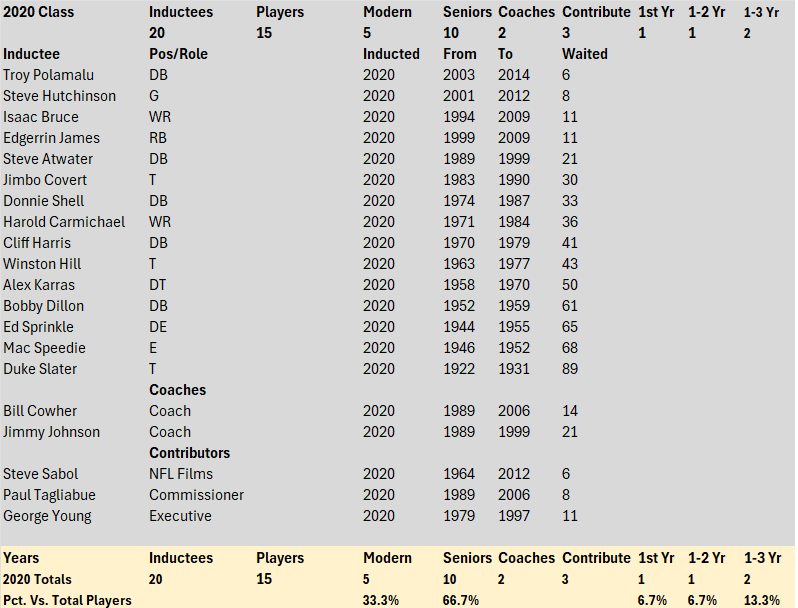
To mark the NFL’s 100th season, a Centennial committee was formed, bringing additional voices into the selection process beyond the traditional structure. The result was a class of 20 inductees, including 10 seniors — unprecedented in both size and composition.
I was part of that process. It was an honor to be on that Centennial Committee
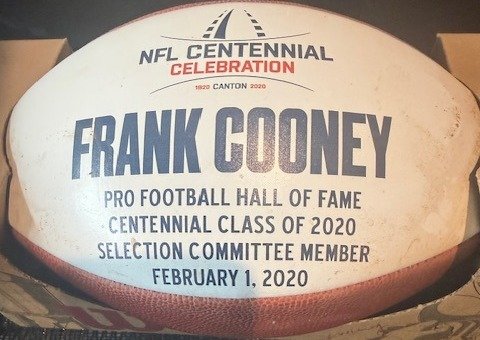
But it did not feel like a typical Hall of Fame cycle.
The dynamic changed. Candidates long in the pipeline were joined — and in some cases bypassed — by others who advanced through this different path. That alone altered the room. We will discuss other reasons later in the series.
Some selections were expected. Others surprised even those inside the process.
The induction of coaches Bill Cowher and Jimmy Johnson caught many off guard — not because of they lacked credentials — but because their support did not align with what selectors believed was established in the room.
The moment extended beyond the process itself. Hall president David Baker delivered on-air announcements to inductees during their TV shows, turning what traditionally was an internal, deliberative conclusion into a public reveal. That, too, felt different.
At the same time, long-debated candidates gained sudden entry. That included former commissioner Paul Tagliabue, who was the subject of often heated discussion about about his candidacy beginning in 2007. That was the first of three consecutive rejections as a finalist. He was eliminated as a semifinalist five times and as a semifinalist five times for reasons we will discuss in another part of the series. .
So, while that class resolved some long waits, it also raised new questions — about process, about structure and about how decisions were being made.
2020 Centennial Class
In the years that followed, the Hall continued to adjust — expanding classes, advancing more senior candidates and modifying the process itself. The intent was clear at first: balance the present with the past. But then there were more changes.
The results became murky, difficult to rationalize.
2021–2026 Snapshot

- Players: 36
- Within 3 years: 41.7%
- Modern Era: 75%
- Seniors: 25%
The system searched for equilibrium.
The Hall of Fame always reflected the game it honors.
As the game expanded, so did the pool of candidates. As the pool expanded, the process adjusted. Sometimes smoothly. Sometimes abruptly.
What emerged over time was not a fixed system, but a managed one — shaped by limits, influenced by pressure and, at times, altered by design.
The Hall does not simply select the best players each year.
It selects those who survive the process that year.
Next: Part III — The Room before the Zoom.
Here is downloadable chart listing every inductee in the Pro Football Hall of Fame and details about his selection.
If you need help downloading the file, email me at fcooney@sportsxchange.com