HOFame: History, Mystery, Future, Part I
Part I: Kennedy, Rozelle and Birth of Hall in Transformative ’60s
🏈🏈🏈🏈🏈🏈🏈🏈🏈🏈🏈🏈🏈🏈
Editor’s note: This is the first in a series of articles on the evolution of the Pro Football Hall of Fame, from concept to completion and through the years to the current status. Written by Frank Cooney, in his 33rd year on the Hall of Fame selection committee. We offer unique research, analysis and data to complement this series
*Access the full HOFame Reference post here.
Hall of Football is not affiliated with the Pro Football Hall of Fame. All analysis and opinions expressed are solely those of Hall of Football (HallofFootball.substack.com).
🏈🏈🏈🏈🏈🏈🏈🏈🏈🏈🏈🏈🏈🏈
Pro football mirrored the chaos, growth and change of America itself during the
1960s, a decade that reshaped both the country and the sport.
Six decades later, the mirror still holds. But rather than show a move toward common purpose, it now reflects a country—and a Hall of Fame—pulling in different directions.
The launch of a Pro Football Hall of Fame rose from a time the game and the country moved in the same direction, even as both evolved faster than the structures built to define them.
The early 1960s carried a sense, an aura of inevitability — however imperfect in hindsight — that institutions could be shaped by shared purpose.
Youthful president John F. Kennedy’s Camelot came to symbolize that belief, a moment when aspiration and image briefly aligned.
Young NFL Commissioner Pete Rozelle tapped into a similar instinct within professional football. His concept of “League Think” asked owners to see beyond individual advantage and act in the interest of the whole.
Think …” ask what you can do for your country.”
Rozelle’s all-for-one idea was not universally embraced, particularly among the league’s most powerful franchises, but it held long enough to unify the sport at a critical point in its growth.
From that idea came one of the most consequential developments in professional football history: the Sports Broadcasting Act of 1961, which allowed the league to negotiate television contracts collectively and distribute the revenue among its teams — a ploy Rozelle borrowed from the upstart American Football League.
It proved both dynamic and durable. Recently, President Donald Trump invoked the SBA of 1961 in an attempt to address the chaos in college sports. So, the reach of that moment still lingers.
Television accelerated everything. Football’s rhythm — violent bursts of action separated by brief pauses — translated perfectly to the black-and-white sets becoming fixtures in American homes. Sunday afternoons became ritual, the audience expanded, and the stakes followed. Growth came quickly, and with it came expectations the sport had never faced before.
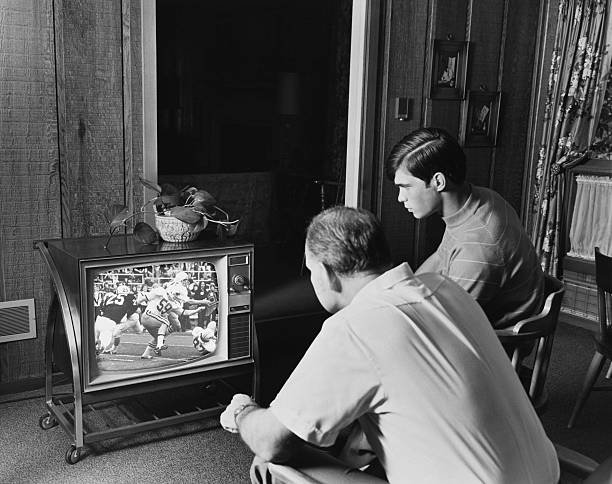
Sundays increasingly meant families gathering around a smallish screeen to watch a game that was rapidly moving from regional curiosity to national spectacle. Yet even as professional football surged forward, its past was growing longer. The league already existed for more than four decades and produced a generation of players, coaches and founders whose contributions shaped the game of that time.
The question became unavoidable: how would professional football preserve and honor its own history? The Pro Football Hall of Fame was created to preserve history, but it would soon interpret it — and from the beginning, interpretation meant choice.
Why Canton?
Canton did not simply win a bid; it made a case rooted in the game itself. The Canton Bulldogs helped establish pro football’s early credibility. It was inside a downtown showroom owned by Ralph Hay (who, signficantly, owned the Canton Bulldog team) that fourteen league organizers gathered in 1920, including George Halas, to form what would become the National Football League.
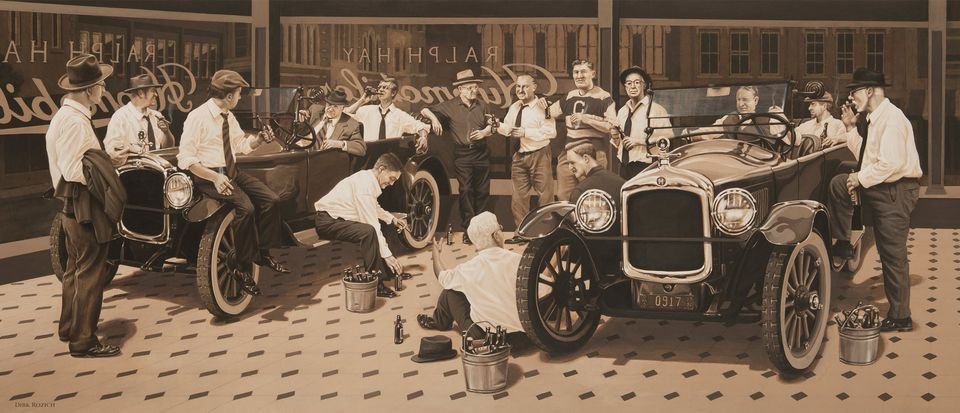
That history carried weight, but history alone did not decide it. Canton’s push was not purely sentimental. The city was long known for involvement in organized crime, earning the nickname “Little Chicago.” It served as a hub for gambling, bootlegging, and labor racketeering. The area was known for corruption and violent crime.
An enlightened Canton population was looking to reshape its image and anchor itself to something lasting. The turning point came quickly. The day after the Hall of Fame idea gained traction in a local Repository newspaper story, Henry H. Timken pledged $250,000, saying he would give the effort “every resource it needs.” That commitment changed the equation. Latrobe, PA — an early contender tied to the league’s origins — relied on league funding that never materialized. Canton brought its own.
🏈🏈🏈🏈🏈🏈🏈🏈🏈🏈🏈🏈🏈🏈
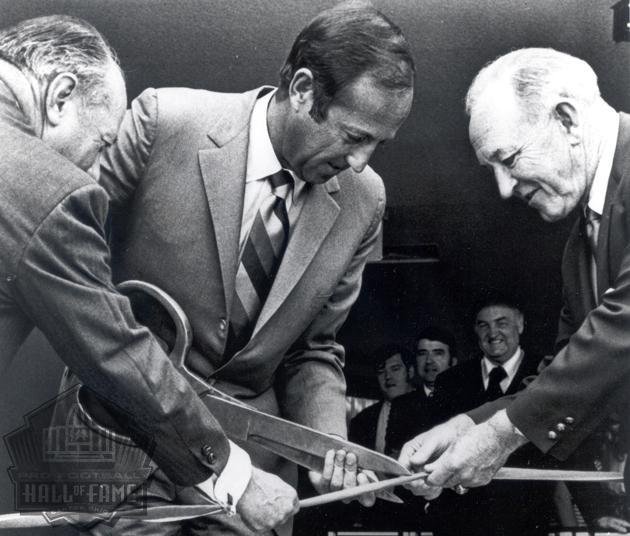
Rozelle understood the symbolism and backed the Canton effort, recognizing both its historical significance and its practical value as the league defined itself on a national stage. The Hall was not placed there by accident; it was secured — with history, persistence and money. The commitment was real, and so was the expectation that came with it. Growth was always part of the vision. The Hall began with what the community was willing to give. Eventually, the Hall’s own exuberant growth exceeded its means.
The original selection committee was small — 14 voters representing NFL cities, most of them veteran sportswriters — and it did not emerge from a neutral process so much as from a room shaped by the game those voters knew and the perspectives they brought with them.
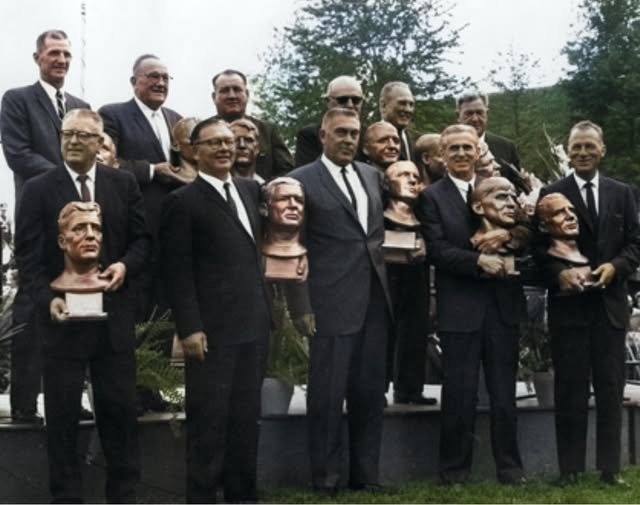
The Pro Football Hall of Fame announced its inaugural 17-member class on January 29, 1963. Hall director Dick McCann, who left his cushy GM job with Washington football team to plunge into this Ohio startup — introduced the charter class that would be formally enshrined that September: names that still define the game — Jim Thorpe, Red Grange, Bronko Nagurski, George Halas.
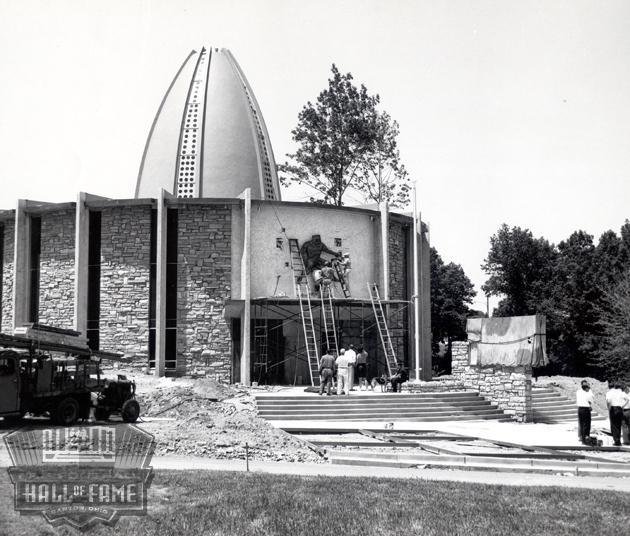
It began with Thorpe — not just a name, but a foundation. A legendary Native American Olympic champion, stripped of his medals under archaic amateur rules and later restored to his rightful place in history, Thorpe stood as a symbol of the game’s origins. His likeness would anchor the Hall’s original rotunda, a life-size reminder of where it all began. Jim Thorpe was the original, genuine All-American.
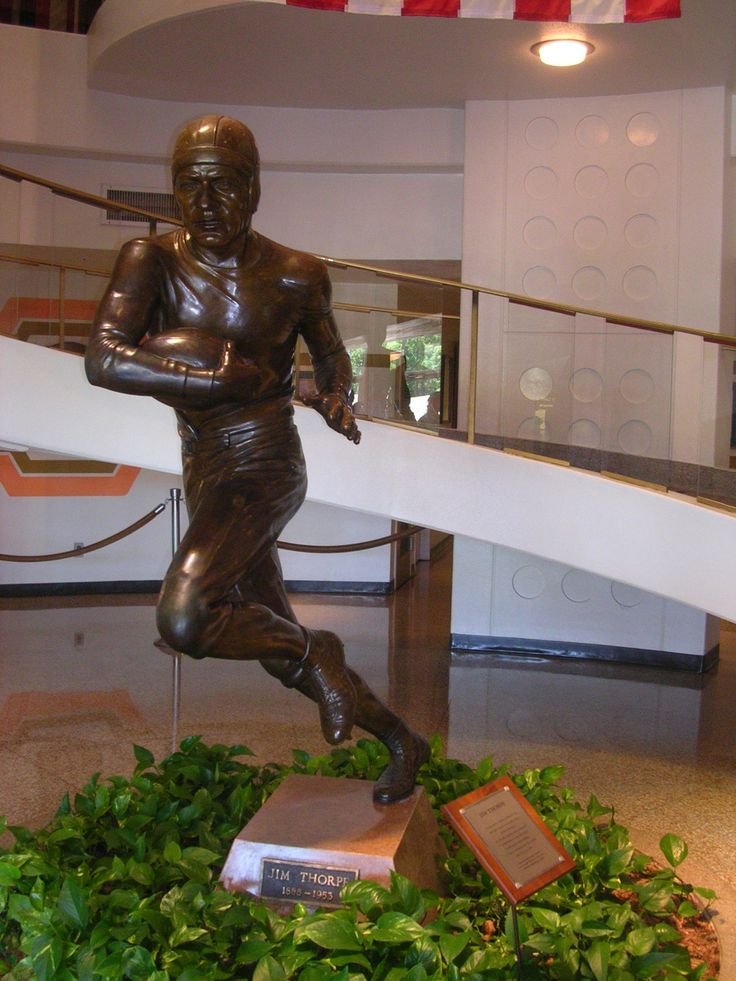
Many of the selections were obvious. But from the beginning, the choices reflected more than performance. They revealed ideological perspectives of the moment.
George Preston Marshall, an avowed segregationist, was included, while Fritz Pollard — pro football’s first great Black player and coach — was not. Marshall did not integrate his team until federal pressure tied to his stadium lease forced the issue; his Washington team was the last in the NFL to do so.
Marshall downplayed the issue of integration, saying “I am surprised that with the world on the brink of another war they are worried about whether or not a Negro is going to play for the Redskins” and doubted that “the government had the right to tell the showman how to cast the play.”
In 1961, United States Secretary of the Interior Stewart Udall and Attorney General of the United States Robert F. Kennedy issued an ultimatum: unless Marshall signed a black player, the government would revoke the Redskins’ 30-year lease on D.C. Stadium (later known as RFK Memorial Stadium). Udall and Kennedy were well within their rights to take this action, since D. C. Stadium was funded by government money and was located on federal land.
Marshall selected Ernie Davis as his top pick in the 1962 draft. The Syracuse University All-American running back was the first Black Heisman Trophy winner. However, Davis refused to play for the team and was traded to the Cleveland Browns for All-Pro Bobby Mitchell, who became the then-Redskins’ first black player. He played until 1958 and was enshrined in the Hall of Fame in 1983.
We can only imagine what the backfield of Jim Brown and Ernie Davis would have done in Cleveland. Davis died of Leukemia in1963, but not before recruiting Floyd Little to Syracuse where Little “tried to be the Ernie Davis that Ernie Davis couldn’t be.” Little was a two-time All American before playing for the Denver Broncos and was inducted into the Pro Football Hall of Fame in 2010.
Pollard, a pioneer of the sport, would not be inducted until 2005 — 29 years after his death.
The contrasts did not require explanation. They reflected their moment in history.
By the early 1960s, Black players remained underrepresented across the league and often confined to limited roles. The game was integrated in principle, but not fully in practice, and that reality began to change as the decade progressed.
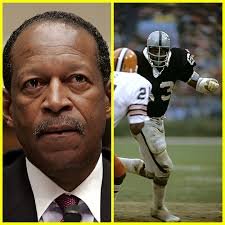
The fledgling rival American Football League expanded the talent pipeline, drawing heavily from historically Black colleges and universities, while scouts widened their search to identify players long overlooked by traditional channels. Players like Gene Upshaw entered the league during this period and would go on to shape it beyond the field.
🏈🏈🏈🏈🏈🏈🏈🏈🏈🏈🏈🏈🏈🏈
The talent was there. Always was, really. The difference: who was seen — and who was not. Meanwhile, the sport itself was evolving rapidly.
Television expanded football’s audience nationwide. The AFL challenged the NFL’s dominance. AFL talent scouts discovered extraordinary players at historically Black colleges and universities, programs long overlooked by the NFL’s traditional recruiting routes. Personnel pioneers such as Kansas City scout Lloyd Wells and Pittsburgh evaluator Bill Nunn Jr. helped identify a generation of players who would transform the professional game.
By the end of the decade, the transformation was unmistakable. In 1959 there were 50 Black players in the NFL. The addition of the American Football League made a huge impact. In 1969, the championship Kansas City Chiefs listed 19 Black players on the 40-man roster, 12 of them starters, such as Willie Lanier, Buck Buchanan, Bobby Bell and Emmitt Thomas. The game changed faster than everything around it.
During the seven decades since the Hall’s inception, voting procedures and philosophical debates would change repeatedly, sometimes quietly and sometimes dramatically.
What began in Canton as a straightforward effort to honor the game’s pioneers would not remain simple.
Over time, the Hall’s selection process did not merely evolve — it constantly changed to meet the moment, as standards shifted and pressures emerged, some visible and others less so. To understand the Hall of Fame today, you must understand how — and why — those changes occurred.
We will explore those things in this series.
Next: Evolution — and an inconvenient truth. Due 5-5-26